

With the government’s long promised ban on Section 21 evictions, sometimes known as no-fault evictions, once again returning to the front pages, we wanted to take some time to unpack this. What does it mean for tenants? Why are they necessary? What protection, if any, is there currently from a no-fault eviction?
The government first promised a ban on no-fault evictions in 2019, which has thus far failed to materialize. A Section 21 (S21), or no-fault eviction, is an eviction for which a landlord does not have to give a reason. As long as they have followed the correct process (more on this later), then there is little that a person do to halt it.
Figures released by housing charity Shelter estimate that since the ban was first promised in 2019, more than 26,000 S21 evictions have since taken place [1]. Going further, Shelter estimates that more than a third of tenants take longer than two months to find a new home once they receive that no-fault eviction notice. With landlords only required to give a minimum of two months’ notice, that leaves thousands of people at risk of homelessness.
Society Matters prides itself on our ability to think of the people behind the process; behind every statistic is a person and a family that faces being uprooted, losing the roof over the head and finding themselves in a housing market where rents are increasing at a rate fast outpacing peoples wages or benefits. Indeed, Shelter estimate that one person over 55 is served with a S21 eviction notice every 16 minutes [2].
The government have themselves described their Renters Reform Bill, with which they promise to outlaw S21 evictions, as ‘bringing in a better deal for renters.’ This is an implicit recognition of the challenges renters face. The government have stated that insecure housing (like being susceptible to a no-fault eviction) demonstrably worsens children’s educational outcomes, makes it more difficult for people to hold down employment and establish roots in their local communities [3]. We have to ask ourselves, if this system is recognizably unfair, why has it taken so long for this to be acted on?
When someone faces a Section 21 eviction, by its very nature, there is little we can do to challenge; if there’s ‘no fault’ then there is no reason. But there are avenues by which we may be able to challenge the validity of a S21 notice. For example, your landlord must:
- Have protected your deposit in an approved Tenancy Deposit Scheme
- Have provided with a copy of your Energy Performance Certificate for the property.
- Have provided a copy of your Gas Safety Certificate for the property.
- Have provided a copy of the How to Rent guide available from the government.
- Have given you the correct notice period of 2 months (though this can be more in some cases)
In the event that a landlord hasn’t done this, we can challenge the validity of a notice. However, the landlord can correct the error (e.g. giving you a copy of your EPC if you haven’t had one already) and re-issue a S21 notice. This won’t stop the eviction altogether, but it does allow people more time in their property to perhaps think about their plan for moving on to a new property. Whilst someone issued with a Section 21 notice doesn’t necessarily need to leave the property by the end of that 2 month period, tenants often don’t see it that way. The difficulty then is that if they do seek homelessness support from the local authority, they run the risk of being found ‘intentionally homeless’ and impacting their chance of accessing that crucial help.
Recently, Michael Gove promised during an interview that Renters Reform Bill would pass by the time of the next election (scheduled for January 2025 at the latest), providing that ‘better deal’ for renters. The sad truth is that every day that that is delayed costs more and more people their homes, stability and independence.
If you want to find out more about Section 21 evictions, or housing/homelessness more generally, be sure to check out Society Matters’ CPD-accredited course on Housing and Homelessness [4].
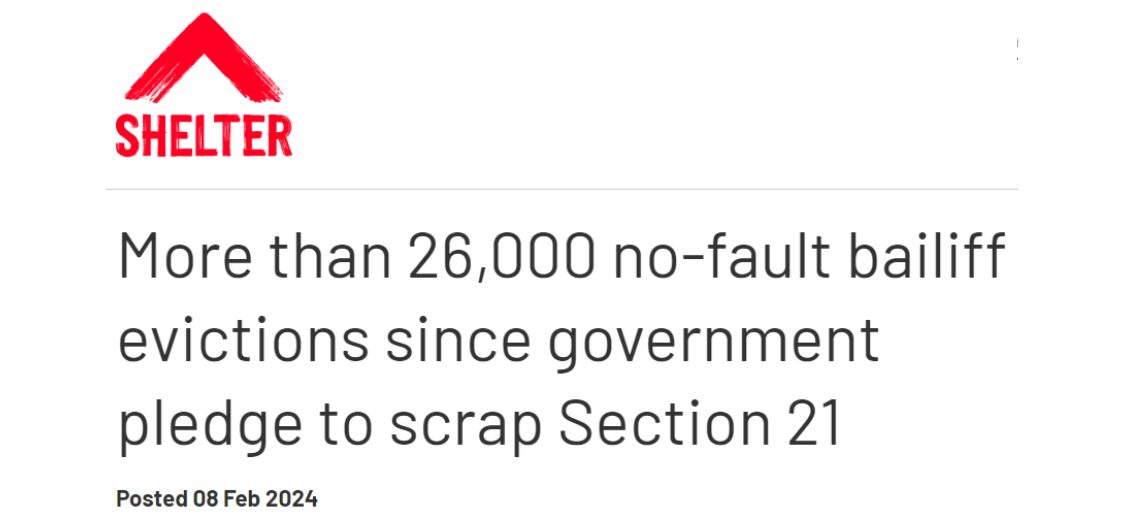
[1] Shelter – More than 26,000 no-fault bailiff evictions since government pledge to scrap Section 21
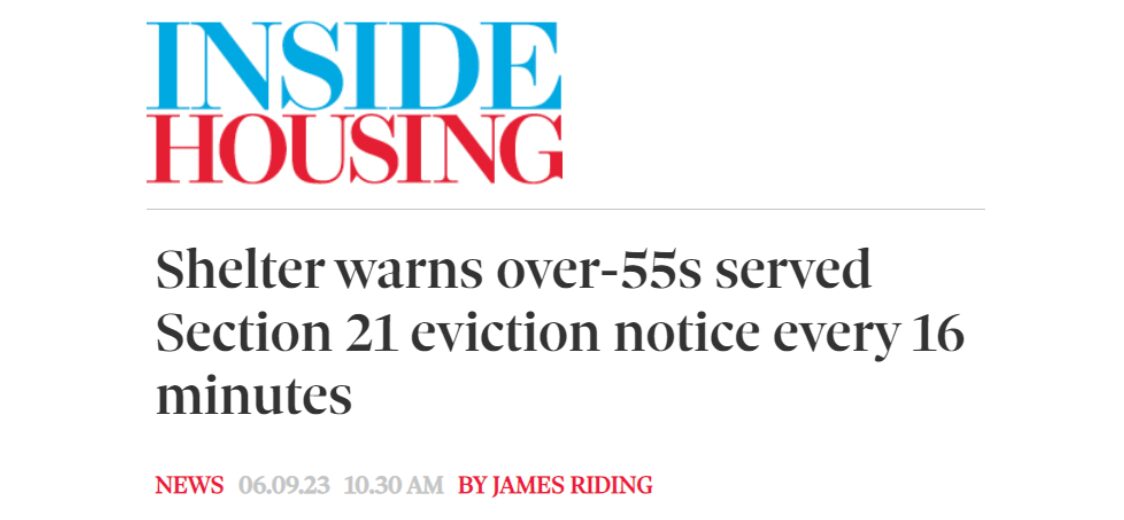
[2] Inside Housing – Shelter warns over-55s served Section 21 eviction notice every 16 minutes
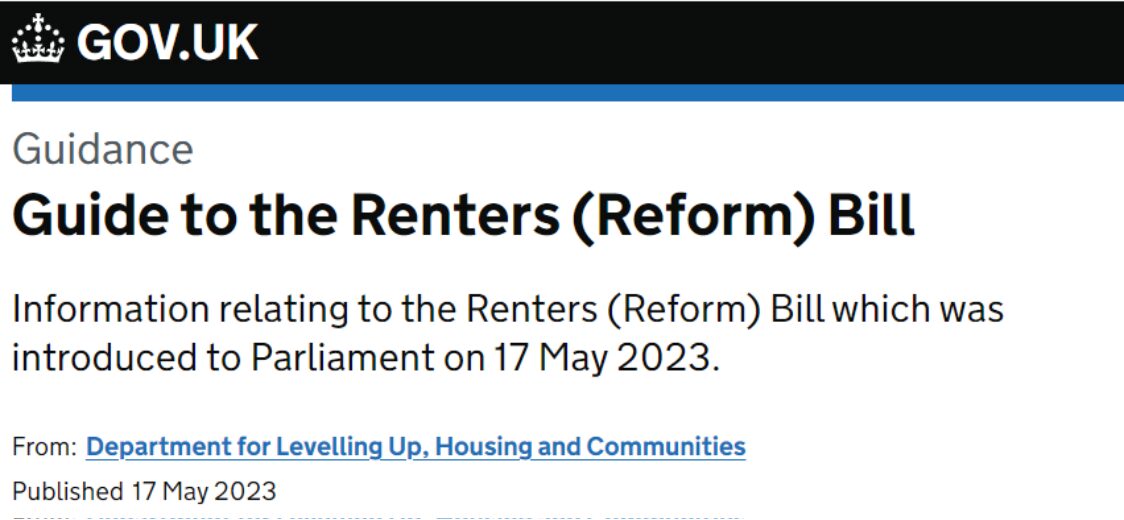
[3] GOV.UK – Guide to Renters (Reform) Bill

[4] Housing and Homelessness workshop from Society Matters cic