

In recent months, the government have signified an increased commitment to recovering fraudulent benefit payments. Notably, this includes plans to use artificial intelligence (AI) to scan the bank account of every benefit claimant to look for suspected benefit fraud and trigger an investigation. Aside from the implications for privacy on these proposed measures, fraud investigations typically result in the suspension of a benefit pending the outcome of. Given the length of time these investigations can take, this has serious ramifications for the people behind the process; the families struggling to get by.
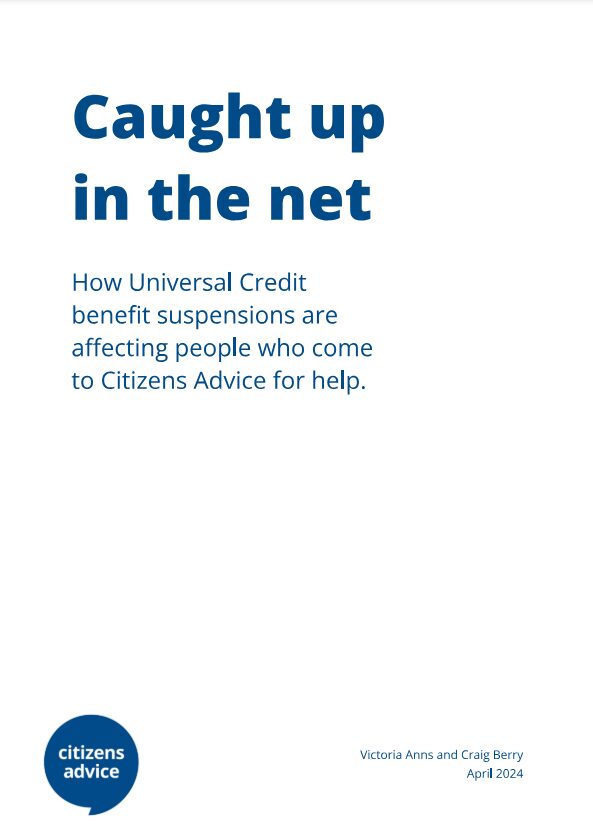
A recent report published by Citizens Advice has laid bare these harsh realities. We know that people on Universal Credit can struggle – 70% of people on UC waiting for their first payment go without essentials like food or fuel whilst waiting. 10% of people who have their benefits suspended pending investigation (in cases of suspected fraud) will have it reinstated.
Noted in the report was that more than half of those affected were households were someone had a health condition or disability; a section of the population who are already more likely to be living at or below the poverty threshold and so least able to weather the storm of a substantial loss of income.
How do these people cope in the interim? Benefit suspensions in cases of fraud do not affect many of the clients we deal with day to day, but we know that where they are affected, they are acutely vulnerable to hardship. As mentioned above, the government are seeking to widen the surveillance powers afforded to allow them to use artificial intelligence to scan benefit claimant’s bank accounts for characteristics associated with fraud. Without proper safeguards in place, there is a significant risk that more and more people find themselves ‘caught in the net.’
For example, the report highlighted how those who face investigation for fraud can face requests for evidence to prove their entitlement but that they can often have evidence refused with no reason given as to why it was unsuitable (thereby allowing them to act on it), or simply that they were asked for in excess of 20 pieces of evidence yet were given only a single link that only allowed them to upload 5 pieces of evidence and so extending the length of time it takes to resolve the investigation and by default the time the claimant must survive without that income. Similarly, it was noted that people face significant difficulty in even engaging with the investigation. They received an initial notification listing the general Universal Credit Helpline number, then contacted them and were told to wait for a callback from the ‘Enhanced Review Team’ often taking several days. In all of this time, they have no way to meaningfully engage with the investigation.
If a person’s benefits are reinstated following suspension, they do receive a backdated payment – but again, how does this support them in the interim? Is a claimants landlord going to wait until the investigation’s end before starting eviction proceedings for rent arrears?
The report also noted that more than half the households affected by benefit suspensions included foreign nationals. Over the same period, where Citizens Advice helped people with broader UC issues only 17% were recorded as foreign nationals. If we apply this results more widely, it suggests that foreign nationals are disproportionately more likely to be subject to benefit suspensions.
On the back of this report, and the hardship it exposes for various groups of society, often those who have the least, Citizens Advice has made several recommendations:
- The establishment of a baseline vulnerability criteria for claimants that would be at disproportionate risk of destitution can be identified and proactively supported
Conclude investigations more quickly, particularly where claimants are fully engaged in the process
Offer alternative support for those who might struggle to provide evidence (for example through lacking digital literacy) as well as the provision of a hardship fund for those who might struggle without payments.
The government has a right and an obligation to ensure that public money is used fairly – but that shouldn’t mean that people should be at risk of being caught out by an inflexible system that can’t support them when they’ve done no wrong.